The Ultimate Biscuit Texture Checklist: Crisp, Crumbly, Chewy, or Flaky?
A biscuit can smell of butter, vanilla and toasted oats and still let you down the moment you bite it. Flavour gets the attention; texture decides whether you reach for a second one. It is also the thing most reviews describe badly. "Nice crunch" tells a reader almost nothing. Did it snap, shatter or bend? Did it dissolve into dust or fight back?
That gap is what this checklist is for.
Why Texture Is Harder to Describe Than Flavour
We borrow flavour words from the kitchen constantly — toasty, caramelised, buttery, burnt. Texture words are less obvious. Most of us reach for the same three: crunchy, soft, dry. That vocabulary collapses the moment you compare a brandy snap with a digestive. Both are "crunchy", but one shatters into glassy shards and the other fractures into coarse crumbs.
Texture also moves. A single biscuit has at least three textures: the surface, the first bite, and the finish. A Hobnob is rough and oaty on top, firm but yielding at the break, and faintly claggy once chewed. Rate only the first bite and you miss two-thirds of the story.
The Core Four, and What Each One Actually Means
Crisp
Crisp is about a clean break. Press a crisp biscuit and it resists, then gives suddenly, usually with an audible snap. Think a thin ginger snap or a well-made tuile. The sound matters, the shards should be thin, and the finish should be short — crisp biscuits should not hang around in the mouth.
Crumbly
Crumbly is controlled collapse. A shortbread finger or a Viennese swirl breaks into soft, sandy pieces rather than shards. The giveaway is what happens to your lap and the plate. Crumbly biscuits drop debris; crisp biscuits do not. Crumbly is not the same as stale — a stale biscuit is soft and bendy, while a crumbly one is dry but still structurally intact.
Chewy
Chewy means resistance that comes back. A fig roll or an oat-based flapjack biscuit pushes back and keeps pushing back through the chew. Good chew is springy; bad chew is leathery, tacky or claggy. Chew slowly for ten seconds — if the texture is still fighting you after that, the chew is the dominant feature and belongs in the headline of your review.
Flaky
Flaky is layers. Palmiers, Viennese fingers and anything laminated break into distinct sheets with air between them. Flaky biscuits are usually light, faintly rich in a good way, and they fall apart faster than they crumble. Listen for a soft rustle rather than a sharp crack.
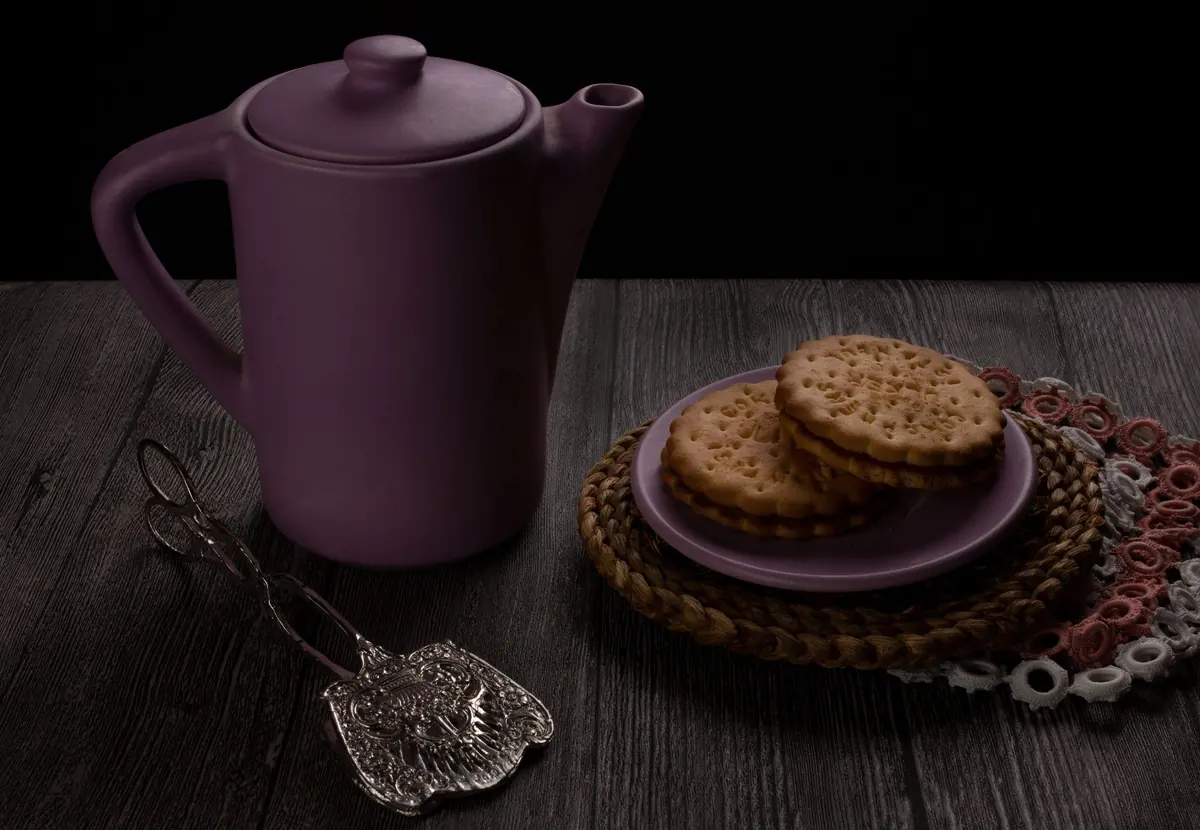
Most biscuits are blends rather than pure types. A chocolate digestive is crisp at the base and snappy through the coating; a custard cream is short and sandy in the shell with a soft, slightly waxy centre. Name the blend instead of forcing one label.
The Five-Minute Texture Test
Before writing a word, run the same routine every time. Consistency is what makes a review useful to someone standing in a shop.
- Look first. Note the surface — smooth, cracked, sugar-flecked, dimpled — and the thickness of the edges. Thin edges mean a faster snap.
- Break it in half close to your ear. Sharp crack, dull thud, or near silence? The sound predicts the bite.
- Press the cut edge with your thumb. Does it spring back, crumble away, or hold firm?
- Bite with your front teeth. This is where you feel the surface and the first fracture.
- Chew three times, then pause. How long does the structure last, and where does it start to go soft?
- Wait thirty seconds after swallowing. Note dryness, coating or lingering graininess. This is the finish, the most underrated part of any biscuit review.
If you dunk, run the test twice — once dry and once after three seconds in tea. Dunking rewrites everything: crisp turns soft, crumbly collapses, and flaky becomes a puddle.
Texture Words That Earn Their Place
A short list used precisely beats a long list used loosely.
- Crisp, snappy, brittle, shattering — all involve a clean break. Snappy suggests thinness, brittle suggests hardness, shattering suggests flying shards.
- Crumbly, sandy, short, mealy — breakage into particles. Short implies fat cutting through the structure; mealy implies a coarse, uneven crumb.
- Chewy, bouncy, tacky, leathery — resistance that persists. Use bouncy for a pleasant chew and leathery when it refuses to let go.
- Flaky, layered, puffed — layers you can see or feel separating.
- Melting, dissolving, fudgy — structure that disappears fast, usually because of fat or chocolate.
- Chalky, waxy, pasty, claggy — the useful negatives. Say why: chalky coats the tongue without dissolving, claggy sticks to the roof of the mouth.
A texture description should be testable. If another taster cannot feel what you felt, the word is decoration.
Where Texture Reviews Go Wrong
- Confusing crunchy with crisp. Crunchy usually means a rougher, more uneven fracture — a toasted oat cluster, a nut. Crisp means a thin, clean snap.
- Judging a packet on one biscuit. Taste two or three from different layers of the pack and say whether the batch behaves consistently.
- Treating "dry" as an insult. A digestive is meant to be dry; a soft-baked chocolate biscuit is not. State what you expected before you criticise.
- Ignoring temperature. A chocolate-coated biscuit straight from a cold cupboard handles differently from one at room temperature. Note the conditions.
- Skipping the finish. The last few seconds in the mouth are where cheap fats and excess sugar show themselves.
Your Texture Checklist for the Next Review
Run the test, choose three words from the list, and order them from first bite to finish. Something like: "Snappy at the edges, sandy through the middle, faintly waxy once the coating melts." That one line does more for a reader than a paragraph of flavour notes.
Then score consistency. Two biscuits from the same pack should behave the same way; if one snaps and one bends, that belongs in the review. Keep a small set of personal reference biscuits — a ginger nut for snap, a shortbread finger for crumb, a fig roll for chew, a palmier for flake — and taste each new find against them. Reference points turn vague impressions into repeatable judgements, and repeatable judgement is what makes a biscuit review worth reading.
Photo: ignartonosbg / Pixabay

Beginner's Checklist for Buying Biscuits Online: Shipping, Freshness, and Packaging
A practical checklist for judging online biscuit sellers on shipping speed, freshness and packaging, plus...
Biscuit Baking Temperature Guide: Convection vs. Conventional Ovens
A practical guide to baking biscuits in convection and conventional ovens, covering temperature tweaks,...
About Us