American Buttermilk Biscuits vs. British Biscuits: What's the Difference?
Ask for a biscuit in a diner in Nashville and you’ll get a warm, flaky round of bread, split and buttered, maybe smothered in sausage gravy. Ask for a biscuit in a café in Bath and you’ll get something thin, crisp, and destined for a cup of tea. Same word, two completely different baking traditions. The confusion isn’t just linguistic; it changes what you order, what you bake, and what you dunk.
Same Word, Different Plate
In the United States, a biscuit is a quick bread: soft, layered, and usually savory. In Britain, Ireland, and much of the Commonwealth, a biscuit is what Americans would call a cookie or a cracker. The two are not close cousins. They share flour, fat, and an oven, but little else. One is leavened with baking powder, handled gently, and eaten warm. The other is mixed to a stiff dough, baked until dry, and stored for weeks.
The split makes for genuine mix-ups. An American visiting London might be offered a “biscuit” with tea and wonder where the gravy is. A Brit visiting Charleston might see “biscuits” on a breakfast menu and expect something to snap, not something to split and butter. In a Manchester supermarket, a homesick Southerner might grab a packet of “biscuits” hoping for bread and find custard creams inside.
The root of the word explains a lot. “Biscuit” comes from the Latin bis coctus, meaning “twice cooked” — bread that was baked, dried, and baked again so it would survive months at sea. That hard, durable food is the ancestor of the British biscuit. In North America, the word drifted toward something softer and richer, while Britain kept the older meaning: dry, crisp, and built to last.
American Buttermilk Biscuits: Soft, Flaky, and Savory
American biscuits belong to the same broad family as scones, shortcakes, and dumplings. They are leavened with baking powder, baking soda, or both, never yeast. Buttermilk brings tang and acidity, which helps the chemical leaveners work and keeps the crumb tender. The goal is a biscuit with a golden, slightly crisp top and an interior that pulls apart in soft sheets.
They are rarely sweet. A good buttermilk biscuit tastes of butter, flour, and cultured dairy, with a faint saltiness that makes it a natural partner for savory food. If you split one while it is hot, steam should curl out. The crumb should be fluffy but not cakey, layered but not dry.
Their spiritual home is the American South, where soft, low-protein flour milled from Southern winter wheat produces a tenderer biscuit than the harder wheat sold in most other places. Before baking powder existed, Southern cooks leavened dough with pearl ash or potash. Buttermilk, a byproduct of churning butter, was simply what was on hand — and it turned out to be chemically ideal for the job.
What Makes a Buttermilk Biscuit Work
Cold fat is the engine. Butter, shortening, or lard is cut into the flour until it looks like coarse crumbs or small peas. Those fat pieces melt in the oven, create steam, and push the dough into layers. Buttermilk adds moisture and flavor. A light hand keeps the gluten from developing too much, which would make the biscuit tough. Folding the dough a few times builds visible layers without turning it into bread. A hot oven gives the biscuit a fast rise and a browned crust.
A few small details separate a decent biscuit from a great one. Keep everything cold — chill the bowl, the flour, and the buttermilk. Work the fat in quickly, leaving some pieces the size of peas. Use a sharp cutter and press straight down without twisting, so the edges stay open and the layers can climb. Handle the dough as little as possible. If you want taller biscuits, cut them thicker than feels right and set them close together on the pan so they rise against one another.
Variations and Serving Rituals
Buttermilk biscuits come in several personalities. Rolled and cut biscuits are the classic: neat rounds with distinct layers. Drop biscuits use a wetter dough and are scooped straight onto the pan, faster and more rustic. Cathead biscuits are big, craggy, and roughly shaped, named for their size. Beaten biscuits are the odd ancestor of them all — a stiff dough pounded with a mallet for a long time, producing a dense, crisp bread made to split for ham.
At the table, they are rarely eaten plain. They are split warm and buttered, filled with country ham, bacon, or fried chicken, drizzled with honey or molasses, or covered in sausage gravy for the Southern classic biscuits and gravy. That gravy is usually sawmill gravy, a milk-and-sausage white gravy, though in some kitchens it becomes red-eye gravy made from ham drippings and strong coffee.
British Biscuits: Crisp, Sweet, and Built for Dunking
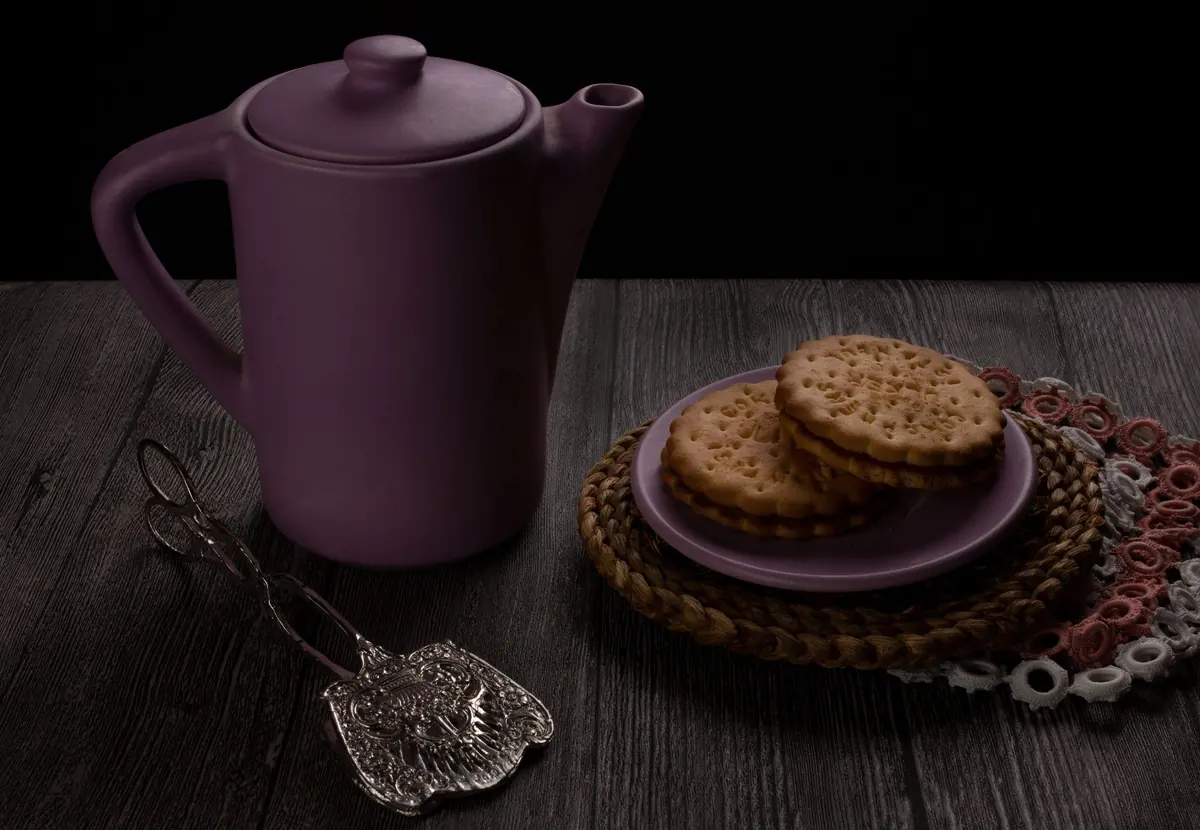
In Britain, the biscuit aisle is a culture unto itself. Digestives, rich tea, hobnobs, custard creams, bourbons, shortbread, Garibaldi, Jammie Dodgers, and chocolate-covered everything. Some are sweet, some are deliberately plain, and digestives are eaten with cheese just as often as with tea. The common thread is texture: low moisture, a dry snap, and a shape designed to be held between finger and thumb while dunking.
British biscuits are usually made by creaming fat and sugar, adding flour, and baking until crisp and golden. They are often restrained in sweetness on purpose, so they can carry a strong cup of tea without competing with it. The category also includes savory crackers — cream crackers, water biscuits, oatcakes — which is why a British cheese board may arrive with biscuits and chutney rather than crackers and jam.
What Makes a British Biscuit Work
It is almost the opposite of the American method. There is very little liquid, so the dough stays stiff and short. Sugar and fat do the structural work, and gluten development is irrelevant — you can beat the dough hard without ruining it. Baking longer and slower drives out moisture, and the biscuit crisps further as it cools. Once cool, it goes into the biscuit tin: airtight, often decorative, and the center of a household ritual. Putting the kettle on and opening the tin are, in practice, one single action.
How the Two Traditions Got Here
Britain industrialized the biscuit. Ports needed ship’s biscuit, and later factories in cities like Reading and Edinburgh turned the twice-baked idea into a mass-market product, sold in decorated tins and shipped around the world. The biscuit became a packaged good with a long shelf life — a snack, not a meal component.
America went the other direction. With soft local wheat, cheap buttermilk, and chemical leaveners arriving in the nineteenth century, the biscuit became a fast, everyday bread. In the South it replaced yeast bread on many tables because it could be mixed and baked in under half an hour. One tradition preserved the word’s oldest meaning; the other quietly reinvented it.
How to Order and Bake Without Confusion
A few practical rules will save you from disappointment on either side of the Atlantic.
- In the US: “biscuits and gravy” is a breakfast dish. A “cookie” is sweet and soft or chewy; a “cracker” is thin, crisp, and savory.
- In the UK and Ireland: “biscuits” covers both cookies and crackers. If you want the soft, lightly sweet thing served with jam and cream, ask for a scone. “Pudding” may simply mean dessert.
- In a restaurant abroad: describe what you want rather than naming it — “a soft, savory scone” or “a thin crisp cookie” gets you much closer than “biscuit.”
- In the kitchen: American biscuit recipes want soft, low-protein flour, cold fat, and a hot oven. British biscuit recipes want plain flour, softened butter, and a moderate oven with a long, slow bake.
A Quick Comparison at a Glance
- Leavening: American — baking powder or baking soda; British — usually none, with lift coming from creaming and steam.
- Texture: soft, fluffy, layered versus crisp, short, snappy.
- Sweetness: savory with a faint sweetness versus sweet or neutral.
- Fat: cold butter, shortening, or lard cut into flour versus softened butter creamed with sugar.
- Liquid: buttermilk, milk, or cream versus almost none, sometimes an egg.
- Shape: tall rounds, squares, or dropped mounds versus thin rounds, fingers, and sandwich shapes.
- How it is eaten: split, buttered, topped with gravy, ham, or jam versus dunked in tea, coffee, or milk, or eaten with cheese.
- Storage: best the day it is baked; day-old biscuits get toasted or turned into bread pudding versus weeks in an airtight tin.
Baking One When You Crave the Other
If you are making American biscuits and have no buttermilk, stir a tablespoon of lemon juice or vinegar into a cup of milk and let it sit for ten minutes, or thin plain yogurt with milk. Grate frozen butter on a box grater for the fastest, coldest fat. Swap in a little cake flour for a more tender crumb, and resist adding extra liquid.
If you are making British biscuits and want that clean snap, cream room-temperature butter and sugar until pale, add flour and any flavorings, then chill the dough as a log and slice it before baking. Pull the biscuits from the oven when they are firm and only just golden at the edges; they crisp as they cool. Store them fully cooled, or they will go soft.
The word is the same; the expectation is not. Order carefully, bake according to the tradition you actually want, and you will get exactly the biscuit you had in mind — one to snap, or one to split.
The Short Answer
American buttermilk biscuits are soft, savory quick breads built on cold fat and cultured dairy. British biscuits are crisp, dry, usually sweet baked goods built for tea, tins, and dunking. Both are excellent at what they do. They just do not belong in the same basket.
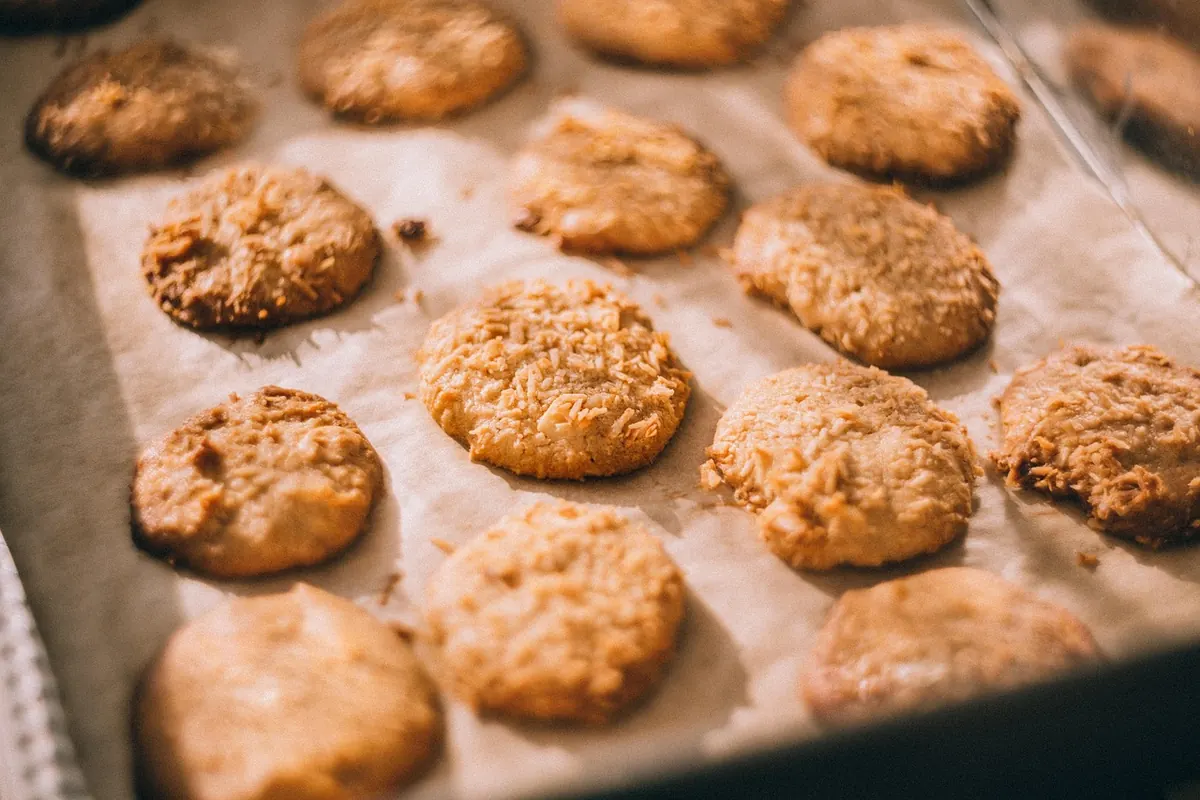
Photo: Clem Onojeghuo / Pexels

Beginner's Checklist for Buying Biscuits Online: Shipping, Freshness, and Packaging
A practical checklist for judging online biscuit sellers on shipping speed, freshness and packaging, plus...
Biscuit Baking Temperature Guide: Convection vs. Conventional Ovens
A practical guide to baking biscuits in convection and conventional ovens, covering temperature tweaks,...
About Us